
Pardon My Language
I use the word “asshole” a total of 25 times in this Article

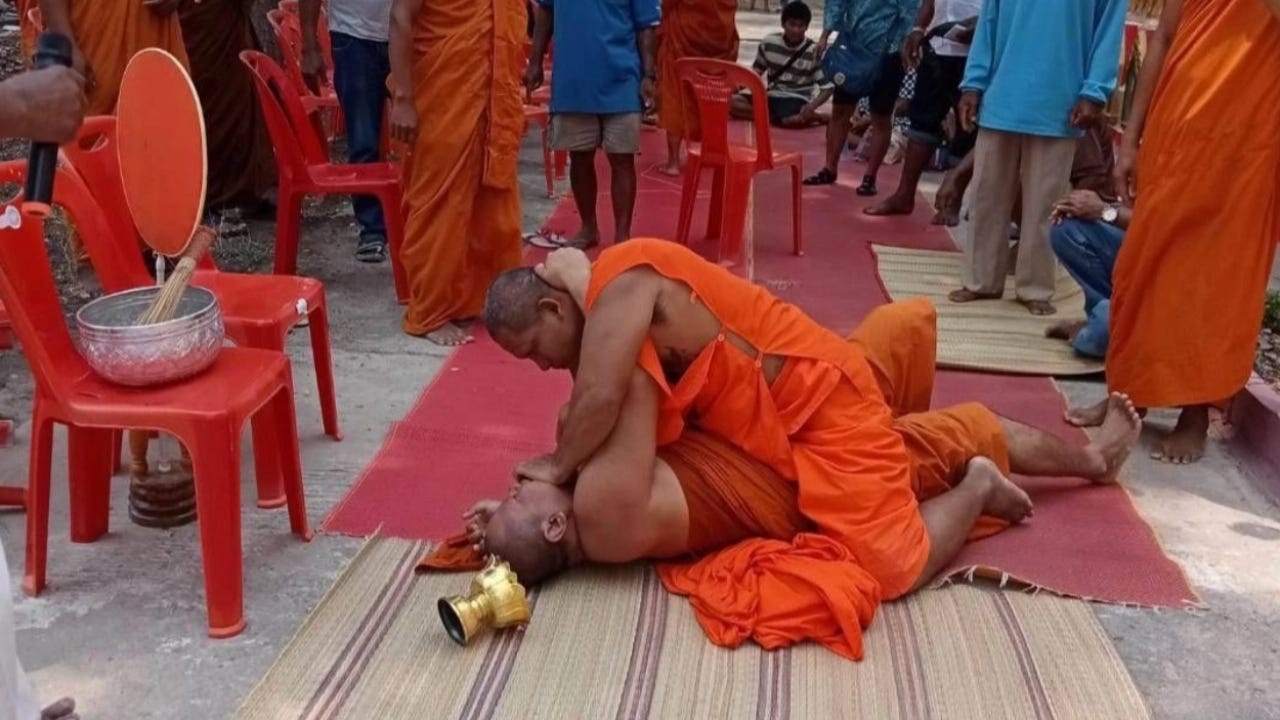
Every spiritual world has them.
The cruel Zen master. The vain bishop. The impossible saint. The occult teacher who can recite every correspondence in the cosmos but can’t apologize to his wife. The contemplative who speaks beautifully about divine union and treats waitstaff like furniture. The adept who has mastered the planets but not basic courtesy.
We all know the type.
The explanations come quickly. They were frauds. The system failed. Power corrupted them. They were narcissists. No one really holy could possibly be that unpleasant.
Maybe.
But here’s another possibility, both simpler and more irritating. The person did the work. The training did what it was designed to do. The saint was a saint, the adept an adept, the master a master.
And that person was still an asshole.
Not a predator, not a clinical narcissist, not an abuser, not secretly uninitiated.
Just an asshole.
This is the possibility our romantic imagination resists, because we want spiritual attainment to do everything at once. We want it to purify the soul, illumine the mind, heal the personality, abolish vanity, produce humility, and make a person pleasant at dinner.
Spiritual attainment is not personality replacement. And grace, apparently, doesn’t always improve manners.
The Romantic Lie
Modern people imagine the spiritually advanced person as a composite ideal: wise, gentle, emotionally regulated, compassionate, humble, trauma-aware, safe to be around.
It’s a lovely image. It’s not the image history reliably gives us.
History gives us saints who were severe and reformers who were impossible. Mystics who were erratic. Bishops who were vain. Philosophers who were petty. Gurus who were domineering. Teachers apparently incapable of ordinary kindness. Even Yoda was kind of a dick.
Some were frauds. Some were dangerous. Some were protected by institutions that cared more about authority than truth.
But some were also, by any honest measure, genuinely accomplished. They prayed. They fasted. They taught. They wrote. They founded institutions, preserved traditions, endured suffering, inspired generations, reached real contemplative depth.
And they remained personally difficult.
This is where our categories break down. We’ve confused sanctity with likability, and we’ve assumed that if a spiritual path is real, it will produce the kind of person we would want as a therapist, mentor, or dinner guest.
Many spiritual systems weren’t designed to produce that person, whatever they may claim. They were designed to produce monks, contemplatives, ritual specialists, theologians, saints, prophets — transmitters of a tradition. None of those is synonymous with pleasant.
Different Lines of Development
There is no single thing called “spiritual growth” that automatically includes every other kind of human growth.
A person can develop spiritually without becoming socially graceful, or develop intellectually without becoming kind. Contemplative depth doesn’t automatically produce someone who’s easy to live with.
This isn’t a contradiction. It’s human nature.
We develop along multiple axes — spiritual depth, moral seriousness, psychological integration, temperament, social grace, doctrinal understanding, ritual competence, courage, ordinary manners. These overlap but don’t collapse into one another. A person can be genuinely brave and personally vain. Doctrinally brilliant and emotionally petty. A vessel of grace in one context and a nightmare in another.
This only shocks us if we expect spiritual practice to automatically produce total human integration. It doesn’t. A practice trains what it trains.
If a system trains attention, it may produce extraordinary attention. If it trains contemplative surrender, it may produce depth of prayer. None of that necessarily teaches a person to stop interrupting, stop needing the last word, stop nursing resentments, or stop being unbearable in committee meetings.
The False Trilemma
When people encounter the Asshole Adept, they tend to reach for one of three explanations.
The first is that the system failed. The tradition promised transformation, but here stands a transformed person who’s still awful to be around. The system may have produced piety, vocabulary, robes, and titles, but it didn’t produce a nice person.
There’s truth here in some cases. Some systems do overpromise.
The second explanation is that the system caused the problem. Hierarchy, secrecy, obedience, guru devotion, clerical entitlement, initiatory rank — these can make a difficult person worse. An ordinary ego gets much more irritating once it’s been given incense, disciples, vestments, and a throne.
That happens too.
The third explanation is the most convenient for believers: the person was never really attained. The saint wasn’t really a saint. The adept somehow skipped the true work and fooled everyone.
Sometimes this is true. But as a universal explanation it gets suspicious fast. If every cruel, vain, or insufferable person recognized by a tradition turns out, on review, not to have been the real thing, the problem hasn’t disappeared. It has moved. Now the problem is that the tradition can’t reliably tell the difference between attainment and performance. If someone can pass through the ranks, receive the title, teach the doctrine, attract disciples, and then be retroactively dismissed as never having attained, the system has a discernment problem. It may not be able to identify its own fruits.
There’s also a fourth possibility, the one nobody likes. The system worked. The person did the work. The recognition wasn’t fraudulent. And the person was still an asshole.
This is the answer that deprives everyone of their preferred escape. Critics can’t say the system failed. Devotees can’t say the person was a fraud. Reformers can’t blame hierarchy or secrecy. Sometimes the path produces what it exists to produce, and the remaining unpleasantness is just the person.
Most People Aren’t Narcissists (an aside)
We need to stop pretending that every unpleasant person is a narcissist.
Clinical language matters. Narcissistic Personality Disorder is real. Abuse is real. Manipulation is real. Spiritual exploitation is real. Some people’s behavior is not merely annoying but destructive, predatory, and clinically significant.
Social media, however, has turned “narcissist” into a lazy synonym for “selfish person I don’t like.” That isn’t clinical seriousness. It’s diagnostic inflation.
A 2020 global meta-analysis estimated the worldwide prevalence of any personality disorder in community populations at around 7.8 percent. NPD is rarer still — the Merck Manual puts it at around 2 percent. Even using higher epidemiological estimates, the basic point holds: most people, even the genuinely unpleasant ones, don’t meet the criteria for Narcissistic Personality Disorder.
They aren’t clinical mysteries. They’re ordinary assholes.
Personality is Hard to Change
This doesn’t mean personality can’t change. It can. But deep personality change is difficult, slow, and humiliating. It requires repeated confrontation with the self, real feedback from people who know you, suffering that gets metabolized instead of merely endured, and often long and serious therapy.
Spiritual practice can participate in that work. It doesn’t automatically perform it at the level of personality.
In fact, many people use spiritual practice to avoid precisely the material that would transform them. They pray instead of apologizing. They meditate instead of repairing. They invoke detachment instead of admitting avoidance. They call contempt discernment, cruelty severity, vanity dignity, and control guardianship of the tradition.
This isn’t unique to spirituality. People do the same thing with politics, art, academia, therapy, activism, business, and parenting. Whatever a person cares about most can become a hiding place.
But spiritual language is especially good at disguising the self from itself.
An asshole with no spiritual vocabulary has to admit, eventually, “I was being an asshole.”
An asshole with a spiritual vocabulary has options. He was preserving the current. Testing the student. Acting from divine wrath. Using Crazy Wisdom. Cutting through ego. Maintaining standards. Obeying God. Serving the Work.
Sometimes he’s right. Sometimes he’s just an asshole with a better costume.
The Asshole Who Does Real Good
A lot of assholes have done more good for the world than many pleasant people ever will.
This isn’t a defense of cruelty. It’s a refusal of sentimentality.
We all know pleasant people who are harmless, agreeable, kind in small ways, and of no particular use when courage is required. We also know difficult people who build things, protect things, teach things, preserve things, sacrifice for things — accomplish things that gentler people can only admire from a distance.
A person can be abrasive and courageous. Severe and generous. Hard to like and still worth listening to.
This complicates our moral imagination because we want goodness to arrive in a form that flatters our preferences. We want tender saints and humble geniuses and gentle reformers. Sometimes we get them. Often we don’t.
None of this excuses everything. There are lines that cannot be crossed. Abuse is not eccentricity. Exploitation is not spiritual severity. Humiliation is not formation. A person’s accomplishments don’t erase the harm they do.
But there’s a vast territory between pleasant and dangerous, and most assholes live there.
What Traditions Actually Test For
A spiritual system tests for the things it values.
A monastery tests for obedience, stability, endurance, liturgical discipline, and fidelity to a rule. An esoteric order tests for symbolic literacy, initiatory progress, discipline, and fidelity to the current. A contemplative tradition tests for silence, attention, perseverance.
Those aren’t useless things. They’re just not the same as personal warmth.
Many traditions do care about moral transformation. Many speak at length about humility, charity, compassion, patience, and love. But the actual mechanisms of formation often reward something else more directly — discipline, loyalty, knowledge, obedience, teaching ability, institutional usefulness. A person can become very good at the things being measured.
If kindness, relational repair, emotional maturity, and ordinary self-awareness aren’t being directly measured, they may remain underdeveloped. That isn’t necessarily hypocrisy. It’s a mismatch between what outsiders imagine the system produces and what the system actually trains.
The Dangerous Person May Not Look Like An Asshole
There’s another reason to be careful here. The openly unpleasant person is usually not the most dangerous person in the room.
Actual dangerousness rarely presents as obvious assholery. It presents as charm, warmth, false humility, careful listening, perfect manners, strategic niceness — the uncanny ability to make each person feel uniquely seen, uniquely chosen, uniquely understood. The dangerous person knows how to appear safe. That’s part of what makes him dangerous.
A plain asshole is easy to spot. He irritates people. He says the rude thing. He doesn’t hide his contempt well. He lacks polish. He leaves behind a trail of eyerolls and exhausted colleagues. Unpleasant, and not subtle.
The truly manipulative predator is the opposite. He’s learned to perform empathy, flatter, mirror desires, weaponize vulnerability, sound gentle while tightening control. He may never raise his voice. He may never appear rude in public. He may be the person everyone describes as kind, patient, wise, approachable, and deeply spiritual.
Until you start to notice the pattern.
People around him become dependent. Boundaries erode. Criticism disappears. Dissent feels like betrayal. The community reorganizes itself around his moods. Those who leave are quietly discredited. Those who stay learn to explain away the unease.
The charm remains intact.
This is why asshole and dangerous person aren’t synonyms. Some assholes are dangerous. Most aren’t.
What This Means For Spiritual Communities
Spiritual communities become saner when they stop expecting one category of development to do all the work. They can honor attainment without pretending it makes someone pleasant, recognize holiness without confusing it with warmth, value knowledge without mistaking it for wisdom, respect severity without excusing cruelty.
They can also stop treating every interpersonal difficulty as a clinical event. Sometimes the right response to an asshole isn’t diagnosis. It’s boundaries. Distance. A smaller role. Not putting him in charge of pastoral care. Not asking him to mentor vulnerable people. Recognizing that his gifts are real but limited.
This isn’t cynicism. It’s the work of discernment that adult communities are supposed to do.
The world doesn’t divide neatly into saints and frauds, healers and narcissists, enlightened masters and obvious villains. Most people are mixed. Spiritual people are mixed. Religious leaders are mixed. Adepts are mixed.
The path may deepen what’s deepest in a person. It may also leave much else untouched.
That’s not a reason to abandon the path. It’s a reason to stop romanticizing it.
The Path And The Person
Some saints are assholes. Some adepts are assholes. Some monks, gurus, bishops, mystics, theologians, and teachers are assholes.
Some are frauds, some are dangerous, some have been protected by corrupt systems, some have used spiritual language to excuse ordinary vice. Not all.
Some are exactly what their communities say they are — serious, disciplined, accomplished, devoted, courageous, real. And also unpleasant.
That doesn’t make them clinical narcissists. It doesn’t make their attainments fake. It doesn’t prove their traditions failed. It doesn’t mean the system secretly produced monsters. It probably just means something much simpler: spiritual work doesn’t necessarily make people pleasant.
Most people aren’t narcissists, however fashionable it’s become to diagnose every unpleasant person from a phone screen. Most disagreeable people are just assholes. Some of those assholes pray deeply, meditate seriously, serve courageously, write great books, build institutions, preserve traditions, and accomplish real good.
They’re still assholes.
The sooner we stop treating that as a paradox, the more clearly we can see both spirituality and human nature.
The spiritual life may save a soul, illumine a mind, discipline a body, refine a will, open the heavens — and still leave a person difficult, vain, abrasive, or insufferable.
That isn’t romantic. But it appears to be true.
https://www.biblegateway.com/passage/?search=Matthew%207%3A15-20&version=NKJV
https://www.biblegateway.com/passage/?search=Galatians%205%3A22-23&version=NIV
I like the distinction Ken Wilber has between "waking up", "growing up", "showing up" and "cleaning up" in terms of spiritual development.
I think what is described in the article is the waking up part.
It was a wake up call (pardon the pun) when I saw that there is a very clear distinction between those that have experienced the truth and those that digest it, live it out and are transformed by it.
https://www.nicholasgrahamsmith.com/blog/wake-up-grow-up-clean-up-show-up
It reminds me of the matrix movies where they wake up but the lusty kid is still making programs about the girl in the red dress, or the guy who betrays them for a better life in the matrix, or even the images of "Zion" as a glorified Night Club. All are "awakened" but they are still missing something.
You think of these folks who have awakened to the knowledge they are in the matrix as enlightened but, particularly in the sequels, it seems focused on pleasure.
Maybe gnosis or understanding is more inferior than we make it out to be, and things such as suffering in this life, empathy and humility are essential parts other process. Hence the need, in Western Christianity not just for "enlightenment" but for "theosis", a transformation.
In Mahayana Buddhism this is contained in the doctrine of both "Wisdom" but also "Compassion", of ensuring that those that become enlightened hold off from completing the process for the sake of all people. The Bodhisattva ideal. Maybe the reason for that is because without compassion and the Bodhisattva ideal there isn't a true enlightenment, knowledge without complete transformation of the soul.
It brings back into focus the fact that there are those, hidden in the crowd, who devote their life to helping others who are maybe superior to the famous enlightened masters.
So, the Christian and Mahayana traditions do have measures but for some reason we do let "waking up" trump all the others.
In this context I feel that in your book "Hidden Unity" the path and life of Louis-Claude de Saint-Martin, speaks a lot of this in the way of the heart:
"Saint-Martin’s subsequent works deepen this same path. Le Nouvel Homme describes the transformation that occurs when the heart has been steadied in recollection; L’Esprit des choses lays out a philosophy of the language of nature, the conviction that things speak if one learns to listen; Le Ministère de l’homme-esprit sets forth the responsibilities that accompany inward awakening, not as a private consolation but as a ministry toward neighbors and toward the world. Reintegration, in this view, is never merely a personal attainment. It is a service: to reconcile, to forgive, to speak truth without harshness, to become transparent to the Word so that the world might be healed through a charity that is not of one’s own making."
Thumbnail: we need the backstory! Oh, I disagree on this point: Yoda was NOT a dick! And you don't even back that up! Like we're supposed to nod along to that??